


Living without a car in the D.C. metro area is not just possible; for many residents, it is the better option. With one of the most extensive transit systems on the East Coast, a growing network of protected bike lanes, and neighborhoods built around walkable streetscapes, Washington consistently ranks among the most car-optional cities in the country.
Whether you are relocating to D.C. for the first time or rethinking your current setup, here is a look at the neighborhoods where car-free living makes the most sense.
Navy Yard and the Southwest Waterfront
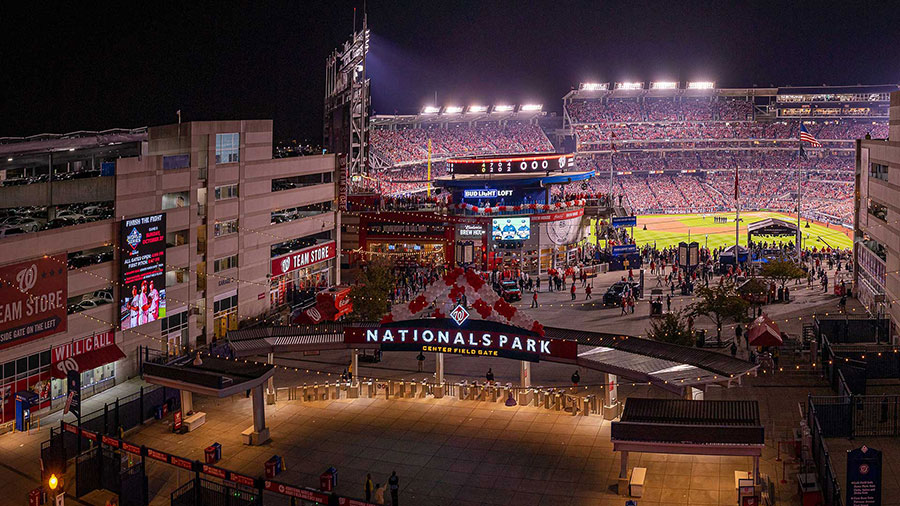
Few neighborhoods in Washington have transformed more completely in the last decade than Navy Yard. Today, it is one of the most transit-accessible and walkable areas in the city, anchored by the Green Line's Navy Yard-Ballpark station and surrounded by riverfront paths, retail, and everyday services within walking distance.
Residents here can reach Capitol Hill in minutes, connect to the wider Metro system with a single transfer, and access the Anacostia Riverwalk Trail on foot. The neighborhood's density makes car ownership genuinely unnecessary for most daily routines.
Walk Score: 90/100 (SW Ballpark-Navy Yard neighborhood — 11th most walkable in DC)
JBG SMITH Living properties in the area include West Half, 1221 Van and F1rst Residences, all positioned within close range of Metro access and the waterfront.
Shaw and U Street

Shaw is one of the most connected neighborhoods in Washington for transit, biking, and walking. The Shaw-Howard University and U Street/Cardozo Metro stations serve the Green and Yellow lines, and the neighborhood sits at the intersection of several major bus corridors.
The corridor between U Street and Florida Avenue is dense with restaurants, grocery options, and neighborhood services, meaning most daily errands are possible on foot or by bike. Shaw also connects directly to the Capital Bikeshare network, which runs throughout the city and into Arlington.
Walk Score: 97/100 (Logan Circle-Shaw neighborhood — 4th most walkable in DC, Walker's Paradise)
JBG SMITH Living residences in the Shaw area include Atlantic Plumbing, The Wren, and 901W.
Bethesda
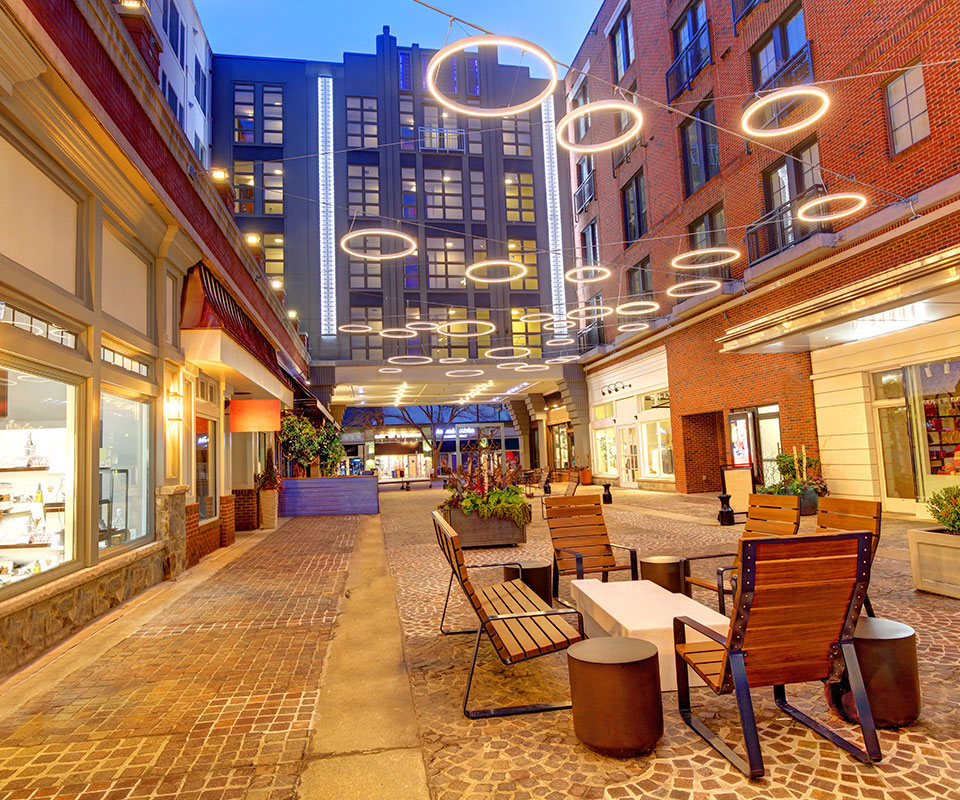
Downtown Bethesda is one of the few suburban nodes in the metro area that genuinely functions without a car. The Bethesda Metro station sits on the Red Line, offering direct service to downtown D.C., and the area's street grid is compact and pedestrian-friendly by suburban standards.
Residents have walkable access to a full range of grocery stores, restaurants, and retail. The Capital Crescent Trail connects Bethesda to Georgetown. The Purple Line, currently under construction, will add crosstown rail access when it opens and will also restore the trail segment east of Bethesda to Silver Spring.
Walk Score: 99/100 (downtown core — Walker's Paradise. Note: city-wide average is 45; scores apply to the downtown area near Metro)
8001 Woodmont puts residents at the center of Bethesda's walkable downtown core. Browse Bethesda apartments.
National Landing, Arlington

National Landing, located in Arlington, VA, is one of the most transit-rich locations in the entire metro region. The Blue and Yellow lines both serve the area, and continued investment in the neighborhood has brought new retail, streetscape improvements, and infrastructure that make the area increasingly walkable.
Reagan National Airport is one Metro stop away, and dedicated bike lanes connect National Landing to the Potomac riverfront trail network. For commuters heading into Washington or toward Tysons Corner, National Landing offers direct access to both.
Walk Score: 93/100 (Walker's Paradise with excellent transit)
JBG SMITH Living offers a range of National Landing apartments, including RiverHouse, 220 20th Street, The Grace, Reva, The Zoe, Valen, and The Bartlett, which anchors the north end of the neighborhood.
How to Think About Car-Free Readiness
When evaluating a neighborhood for car-free living, three factors matter most: transit frequency and coverage, walkable access to daily services such as grocery stores, pharmacies, and laundry, and bike infrastructure for trips that fall between walking distance and transit range.
Walk Score, Transit Score, and Bike Score are useful starting benchmarks when comparing neighborhoods. For residents who want occasional access to a vehicle without owning one, car-share services operate throughout D.C. and Arlington.
Finding the Right Fit
Car-free living in the D.C. metro is not one-size-fits-all. Navy Yard suits residents who want waterfront access, Green Line connectivity, and an energetic, social scene. Shaw works well for those who prioritize walkability and neighborhood density. Bethesda is the strongest option for commuters within Maryland or anyone who wants a quieter streetscape with full urban services. National Landing is the best choice for commuters who need quick airport access, a fast Metro ride into downtown D.C., and connectivity across Northern Virginia.
All four neighborhoods share one thing in common: car ownership here is optional, not required.
Explore JBG SMITH Living apartments across these neighborhoods at jbgsmithliving.com.
Frequently Asked Questions
Is Washington, D.C. good for car-free living?
Yes. Washington, D.C. consistently ranks among the most car-optional cities in the United States. The WMATA Metro system covers the District and extends into Arlington, Bethesda, and Northern Virginia, and neighborhoods like Shaw, Navy Yard, and National Landing have Walk Scores of 90 or above.
What are the most walkable neighborhoods in the D.C. metro area?
Shaw and U Street, Navy Yard, downtown Bethesda, and National Landing in Arlington are among the highest-scoring neighborhoods for walkability and transit access in the D.C. metro area. Each has a Walk Score above 90 in its core and is served by at least one Metro line.
Do you need a car to live in Washington, D.C.?
Many D.C. residents live comfortably without a car. In transit-connected neighborhoods, daily errands, commuting, and weekend activities are all manageable by Metro, bus, bike, or on foot. The right neighborhood choice is the most important factor in making car-free living practical.


