

The post Running and Walking Trails in the D.C. Metro Area by Neighborhood appeared first on .
]]>One of the best things about living in the D.C. area is how easy it is to get outside. There are miles of paved trails for running, walking and biking, many of them following the Potomac and Anacostia rivers or old railroad corridors. They connect neighborhoods, parks and Metro stations, so you can often get to a good trail without getting in the car.
If you’re looking for running trails in DC or nearby Virginia and Maryland, this guide covers some of the area’s main routes, along with parks and trail access near several JBG SMITH Living neighborhoods. We’ve also included a few closures and construction projects worth knowing about before you head out.
The major running and walking trails
The Mount Vernon Trail is one of the area’s most popular places to run, walk or bike. The 18-mile paved trail follows the Virginia side of the Potomac from George Washington’s Mount Vernon estate north to Theodore Roosevelt Island. It also connects with several other regional trails, including the Potomac Heritage, Custis, Rock Creek, Four Mile Run and Woodrow Wilson Bridge trails. The National Park Service lists trail hours as 6 a.m. to 10 p.m. year-round, although commuters are permitted at any time.
The Capital Crescent Trail follows a former railroad route for 11 miles between Georgetown and Silver Spring. The paved portion runs from Georgetown to Woodmont Avenue in downtown Bethesda, making it a convenient option for people living in Bethesda or heading into DC.
The Anacostia Riverwalk Trail follows both sides of the Anacostia River. The full system is planned as a 20-mile route connecting the National Mall at the Tidal Basin with Bladensburg Marina Park in Maryland. Along the way, it passes places including Nationals Park, the Fish Market, historic Anacostia, RFK Stadium and the National Arboretum. The trail has opened in phases, so published mileage can vary depending on which sections are being counted.
The Metropolitan Branch Trail runs for about 8 miles between Union Station and Silver Spring. Through NoMa and Eckington, it follows the rail corridor and serves both as a neighborhood trail and a practical commuter route.
Rock Creek Park offers something a little different. The park stretches through the center of the District, with wooded trails and roads that are particularly popular with runners, walkers and cyclists. The National Park Service keeps roughly five miles of park roads closed to vehicles year-round, including sections of Beach Drive as well as Bingham Drive and Sherrill Drive. Dogs must be kept on leash, and visitors should stay on designated trails.
Navy Yard and the Capitol Riverfront
For residents of Navy Yard, the Anacostia waterfront is right outside the neighborhood.
The Yards Park is a 5.4-acre waterfront park with a quarter-mile boardwalk that forms part of the Anacostia Riverwalk Trail. It’s also a popular spot for events, with summer concerts, fitness classes and festivals held throughout the year.
A few blocks away, Canal Park offers another easy place to get outside. The three-acre park is known for its 42-jet dancing fountain during the warmer months. In winter, the same area becomes an outdoor skating rink.
JBG SMITH Living communities in this area include West Half, F1RST Residences and 1221 Van. Explore Navy Yard apartments to see what’s currently available.
National Landing
National Landing sits along the Potomac in Arlington, making it especially convenient for anyone who wants access to trails without giving up an urban setting.
The Mount Vernon Trail runs along the area’s eastern edge, with a paved route toward Old Town Alexandria in one direction and Theodore Roosevelt Island in the other.
Long Bridge Park adds another option. The more than 36-acre park includes an elevated promenade running alongside the rail corridor, connecting Crystal City with the Mount Vernon Trail. Along the way, there are views across the Potomac, Roaches Run and toward the monuments in Washington, DC.
Just north of Reagan National Airport, Gravelly Point is another well-known stop along the Mount Vernon Trail. The open field sits directly beneath the airport’s approach path, so it’s a particularly memorable place to take a break and watch planes come in.
JBG SMITH Living has seven communities in National Landing: RiverHouse, 220 Twentieth Street, The Grace, Reva, The Zoe, Valen and The Bartlett. Explore National Landing apartments to compare them.
Shaw and the U Street Corridor
If you’re living around Shaw or U Street, there are a couple of good options nearby.
Meridian Hill Park is the closest, with its distinctive terraces and long views along 16th Street. Rock Creek Park is also just to the west and offers a much larger network of trails and green space.
JBG SMITH Living communities in the area include 901W, Atlantic Plumbing, The Wren and 13|U. Explore Shaw and U Street apartments to see current availability.
Union Market and Eckington
Alethia Tanner Park, at 227 Harry Thomas Way NE, connects directly to the Metropolitan Branch Trail. The 2.5-acre park includes an open lawn, children’s playground and dedicated dog park. It’s also used for community events, including a weekly farmers market and outdoor movie nights.
The Batley and Judd & Weiler are both located in this area. Explore Union Market and Eckington apartments to see available floor plans and pricing.
Bethesda
The Capital Crescent Trail is especially convenient if you live in downtown Bethesda. Montgomery Parks lists the trailhead at Woodmont Avenue and Bethesda Avenue, where the paved route heads toward Georgetown. The roughly 7 mile journey into DC is downhill, so be sure to reserve the energy you’ll need to complete the mellow climb back to Bethesda!
8001 Woodmont is located on the same street, putting the trail within easy reach. Explore Bethesda apartments for more details.
What to check before you go
Trail and park hours aren’t the same everywhere. For example, the National Park Service lists the Mount Vernon Trail as open from 6 a.m. to 10 p.m., while individual parks and county-managed trails may have different hours or close at dusk.
Construction is another thing to check, especially if you’re planning a longer run or bike ride. Purple Line construction has affected the Capital Crescent Trail east of Bethesda, while rehabilitation work continues at Meridian Hill Park.
For the most current information, check the agency that manages the trail or park before you head out. Montgomery Parks, DDOT, Arlington County Parks and Recreation and the National Park Service are good places to start.
Dogs are welcome on many area trails and in many parks, but leashes are generally required. Rock Creek Park, for example, specifically asks visitors to keep dogs on leash and stay on designated trails. If you’re looking for an off-leash area, check for a designated dog park rather than assuming dogs can run free.
JBG SMITH Living communities near parks and trails
JBG SMITH Living has communities in each of the five areas covered in this guide.
In Navy Yard, you’ll find West Half, F1RST Residences and 1221 Van.
In National Landing, the communities are RiverHouse, 220 Twentieth Street, The Grace, Reva, The Zoe, Valen and The Bartlett.
In Shaw and the U Street Corridor, JBG SMITH Living communities include 901W, Atlantic Plumbing, The Wren and 13|U.
In Union Market and Eckington, there are The Batley and Judd & Weiler.
In Bethesda, there’s 8001 Woodmont.
If being close to a particular trail is important to you, start with the trail itself. Look at the access points, see which neighborhoods are nearby, and then check the distance from individual apartment communities. A few blocks can make a big difference when you’re heading out for a morning run or a quick walk after work.
Frequently asked questions
What is the best trail for walking or running in the DC area?
It really depends on where you live. The Mount Vernon Trail is convenient from Arlington, the Anacostia Riverwalk Trail is an easy option from Navy Yard, the Metropolitan Branch Trail runs through NoMa and Eckington, and the Capital Crescent Trail is close to downtown Bethesda. All four offer paved routes for walking, running and biking.
Can you bike from Washington, DC to Bethesda?
Yes. The Capital Crescent Trail is paved from Georgetown to Woodmont Avenue in Bethesda. From Bethesda, the path follows Little Falls Parkway toward the Dalecarlia Reservoir, passes through the Palisades area of DC and descends gently toward the Potomac River, then runs alongside the C&O Canal towpath into Georgetown.
Are there parks near Navy Yard?
Yes. Both Yards Park and Canal Park are in the neighborhood, and the Anacostia Riverwalk Trail runs along the waterfront through Yards Park.
Do you need a car to reach parks in the DC area?
Not for most of the parks and trails covered here. Many are within walking distance of the neighborhoods they serve, and others are accessible by Metro or bikeshare. A car becomes more useful for parks farther outside DC in Maryland and Virginia, which aren’t covered in this guide.
Are dogs allowed on DC-area trails?
Generally, yes, but dogs usually need to be on leash. Rock Creek Park specifically requires dogs to stay leashed and on designated trails, and similar rules apply across many DC, Arlington County and Montgomery County parks. Check the rules for the specific park you’re visiting, especially if you’re looking for an off-leash area.
Choosing a neighborhood with the outdoors in mind
If easy access to parks and trails is part of your apartment search, start with the places you actually want to use. Find the trail or park that fits your routine, look at the nearby neighborhoods, and then check the walking distance from specific apartment communities to the nearest entrance or trailhead.
That extra step can help you find a location that works not just on a map, but for your everyday routine.
Search available apartments across Arlington, DC and Bethesda to compare locations.
The post Running and Walking Trails in the D.C. Metro Area by Neighborhood appeared first on .
]]>The post What It Actually Costs to Live in the Washington, DC Area appeared first on .
]]>Housing accounts for a large part of that spending, but it is not the only cost to consider when planning a move to the area. Transportation, utilities, food, and taxes can vary considerably depending on where you live. JBG SMITH Living operates apartment communities in Washington, DC, Arlington, VA, and Bethesda, MD, so the sections below use those three jurisdictions to show how the same decision changes by location.
Housing
Housing was the largest household expense in the Washington area, averaging $35,402 a year in 2023 and 2024, according to the BLS Consumer Expenditure Survey.
That represented 32.7% of total household spending, slightly below the national average of 33.2%. The same BLS survey shows housing accounting for a smaller share of spending in Washington than in several other large metro areas, including Miami (40.0%), New York (38.2%), Los Angeles (36.6%), San Francisco (36.2%), and Boston (35.5%).
One reason is the difference in household income. In the same BLS data, average household income before taxes was $154,383 in the Washington area, compared with $103,012 nationally.
Housing costs also vary significantly within the region. An apartment in DC or Arlington may have a different monthly cost than a larger home in the Maryland or Virginia suburbs. The type of home matters as well. Apartments generally use less energy than detached homes, and residents who live near public transportation may have lower transportation expenses.
When comparing housing costs, it can be useful to consider these expenses together rather than looking at rent on its own. You can browse neighborhoods across the DC area to see how location factors into the total.
Utilities
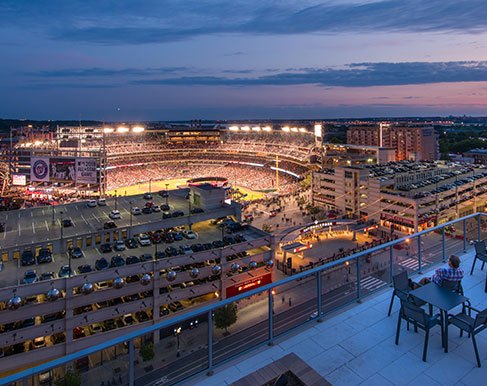
Electricity costs in the District were lower than the national average in 2024. According to the U.S. Energy Information Administration, the average residential electric bill in DC was $113.23 per month, compared with $142.26 nationally. The averages were $165.87 in Maryland and $148.77 in Virginia.
The lower average bill in DC was not because electricity was less expensive. The average residential rate was 17.71 cents per kilowatt-hour in the District, compared with 16.48 cents nationally.
Instead, households in DC used less electricity. Average monthly consumption was 639 kilowatt-hours in the District, compared with 863 kilowatt-hours nationally.
The size and type of home can have a significant effect on energy use. An apartment with shared walls and less space to heat and cool will generally use less electricity than a detached home.
For example, an apartment at West Half, F1RST Residences, or 1221 Van in Navy Yard has less space to condition than a detached house in the outer suburbs, which is reflected in the monthly bill. When you tour, ask which utilities are included in the rent, since that changes the comparison between two apartments more than the rent figure alone suggests.
The EIA figures are from 2024, so they should be used as a reference rather than a current estimate. The BLS Consumer Price Index for the Washington area reported that the energy index increased 22.9% for the 12 months ending in July 2026.
When comparing apartments, check which utilities are included in the rent and which are billed separately.
Transportation
Transportation was another major household expense in the Washington area. According to the BLS Consumer Expenditure Survey, households spent an average of $17,149 a year on transportation, or 15.9% of total spending. The national average was 17.0%.
In the same BLS survey, private vehicles accounted for 85.3% of transportation spending in the Washington area, compared with 91.6% nationally.
For households that can rely on public transportation, walking, or biking, transportation costs can be lower. AAA's most recent Your Driving Costs study estimated the average annual cost of owning and operating a new vehicle at $11,577. That figure includes depreciation, financing, fuel, insurance, maintenance, and registration.
A WMATA Monthly Unlimited Pass costs between $72 and $216, depending on the length of the typical trip. That works out to $864 to $2,592 per year. Metrorail fares range from $2.25 to $6.75, while local Metrobus service costs $2.25.
Whether it makes sense to go without a car depends largely on where you live and where you need to go. Neighborhoods with convenient access to Metro, bus routes, bike infrastructure, and everyday services make it easier to use a car less often. Our guide to car-free neighborhoods in the DC metro covers this in more detail.
National Landing in Arlington is one example. RiverHouse, 220 Twentieth Street, The Grace, Reva, The Zoe, Valen, and The Bartlett are all located near Metrorail, bus service, and protected bike connections, which is what makes reducing or dropping a car realistic rather than theoretical. The Bartlett anchors the north end of the neighborhood.
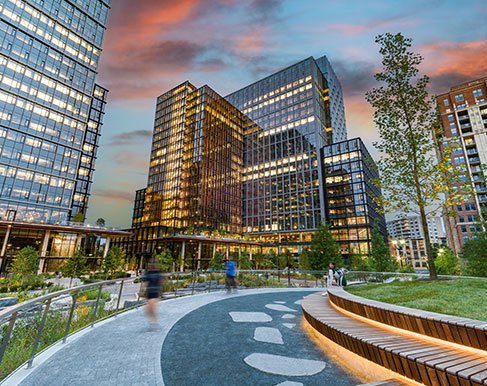
For anyone comparing apartments, it can be helpful to include transportation costs in the housing decision. A higher rent may come with lower transportation expenses if it allows you to use a car less frequently or go without one altogether.
Groceries and dining
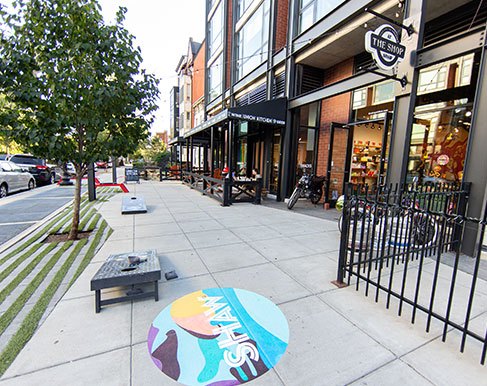
For a relocation budget, it can be useful to estimate both grocery spending and dining out rather than treating food as a single expense.
Income taxes
The Washington metropolitan area spans three tax jurisdictions: the District of Columbia, Maryland, and Virginia. Each has a different income-tax structure.
Virginia has a state income tax but does not impose a local income tax. Maryland has a state income tax as well as county income taxes. Montgomery County, which includes Bethesda, has a local income-tax withholding rate of 3.20% for 2026, according to the Comptroller of Maryland. The District has its own graduated income-tax brackets.
The amount you actually pay depends on factors including income, filing status, and deductions. Tax rates and brackets can also change, so current information should be checked with the Virginia Department of Taxation, the Comptroller of Maryland, and the DC Office of Tax and Revenue.
Taxes are worth considering when comparing housing costs across the region. Two households with the same gross income may have different take-home pay depending on where they live. If you are weighing an Arlington apartment against one in DC or against 8001 Woodmont in Bethesda, the difference belongs in the comparison alongside rent.
JBG SMITH Living communities across the DC area
The costs above are easier to compare when you can look at the same operator in all three jurisdictions.
In Arlington, VA, National Landing includes RiverHouse, 220 Twentieth Street, The Grace, Reva, The Zoe, Valen, and The Bartlett. Virginia does not levy a local income tax, and these communities sit near Metrorail, bus routes, and protected bike connections.
In Washington, DC, Navy Yard includes West Half, F1RST Residences, and 1221 Van. Shaw includes Atlantic Plumbing, The Wren, and 901W. The Union Market and Eckington area includes The Batley and Judd & Weiler at Quincy Lane.
In Bethesda, MD, 8001 Woodmont is in downtown Bethesda near Bethesda Row and the Capital Crescent Trail.
When you compare specific apartments, ask each community which utilities are included in the rent, what monthly parking costs if you plan to keep a car, and what is within walking distance. Those three answers account for most of the difference between two apartments that list similar rents.
Questions about the cost of living in Washington, DC
Is the Washington, DC area more expensive than other major U.S. metros?
Average household spending in the Washington-Arlington-Alexandria metro area was $108,215 in 2023 and 2024, compared with $77,907 nationally, according to the BLS Consumer Expenditure Survey.
In the same BLS data, housing accounted for 32.7% of household spending in Washington, which was lower than the share in several other large metro areas, including Miami, New York, Los Angeles, San Francisco, Boston, and Seattle.
How much should I budget for utilities in a DC-area apartment?
According to the U.S. Energy Information Administration, the average residential electric bill in the District was $113.23 per month in 2024, compared with $142.26 nationally. Maryland and Virginia averaged $165.87 and $148.77, respectively.
These figures are from 2024, and energy costs have increased since then. Your actual utility costs will depend on the size of your apartment, the building, the season, and your usage.
Ask the apartment community which utilities are included in the rent and which ones you will pay separately.
Do I need a car in the DC metro area?
Not necessarily. It depends on where you live and how you travel.
AAA’s most recent Your Driving Costs study estimated the average annual cost of owning and operating a new vehicle at $11,577. A WMATA Monthly Unlimited Pass costs between $72 and $216, depending on the typical trip length.
If you live near Metro or frequent bus routes and have easy access to the places you visit regularly, you may be able to reduce your transportation costs by using a car less often or going without one.
Travel by bicycle is the most affordable way around town, and the DC Metro area is also well outfitted with cycling trails that criss-cross the District and reach deep into Maryland and Virginia. The Capital Crescent Trail connects Bethesda to Georgetown. The WO&D Trail runs from Arlington all the way to Leesburg. This network of trails benefits all sorts of cyclists. Adventure out to George Washington’s home on the Mount Vernon Trail. Race laps around Haines Point with the road cyclists. Commute through Rock Creek, Sligo Creek, the Metropolitan Branch Trail, or the Anacostia River Trail to get to and from work safely and simply.
Is it cheaper to live in DC, Virginia, or Maryland?
There is no single answer. Housing costs, transportation expenses, and income taxes all vary across the region.
Virginia does not have a local income tax, while Maryland counties impose their own income taxes. The District has its own graduated income-tax brackets. Current rates are published by the Virginia Department of Taxation, the Comptroller of Maryland, and the DC Office of Tax and Revenue.
When comparing apartments, consider your expected take-home pay and your other monthly expenses in addition to rent.
Planning your cost of living
The best way to estimate the cost of living in the Washington, DC area is to build a budget around the location and apartment you are considering.
Start with rent, then add utilities, transportation, parking if needed, groceries, dining, and other regular expenses. If you are comparing an apartment in Arlington with one in DC or Bethesda, consider how the location will affect your transportation and tax costs as well.
Search available JBG SMITH Living apartments across Arlington, DC, and Bethesda to compare floor plans, pricing, and availability side by side.
The post What It Actually Costs to Live in the Washington, DC Area appeared first on .
]]>The post Living in the Washington, DC Area as a Military Member appeared first on .
]]>Start With Your Installation, Not the Neighborhood
The most useful thing you can do before signing anything is map your reporting location against the rail network. The region's major military and DoD workplaces sit across three jurisdictions:
- The Pentagon and Joint Base Myer-Henderson Hall, in Arlington, Virginia
- Washington Navy Yard and Marine Barracks Washington, in Southeast DC
- Fort McNair and Joint Base Anacostia-Bolling, in Southwest and Southeast DC
- Walter Reed National Military Medical Center and NIH, in Bethesda, Maryland
Driving between any two of those at rush hour is a chore. Living on the correct side of the river for your assignment is the difference between a short rail trip and a daily crawl across a bridge.
Where Military Households Settle Across the Region
Four submarkets absorb most of the region's military and DoD renters, and each one lines up with a different set of installations.
National Landing (Arlington, VA)

For Pentagon and Joint Base Myer-Henderson Hall personnel, National Landing is the default. It covers Crystal City, Pentagon City, and Potomac Yard in Arlington, Virginia, and it is the closest dense residential area to the Pentagon. Pentagon station sits on the Blue and Yellow lines, and Crystal City station adds VRE commuter rail for anyone coming in from further out in Virginia. Downtown DC is two Metro stops away, so residents get Virginia residency with a short trip into the District.
JBG SMITH Living operates seven communities here: RiverHouse, 220 Twentieth Street, The Grace, Reva, The Zoe, Valen, and The Bartlett, which anchors the north end of the neighborhood near Pentagon City. RiverHouse also includes a committed affordable component, worth asking about for junior enlisted households where BAH runs tighter against market rent. More on the area in our National Landing neighborhood guide.
Navy Yard and the Ballpark District
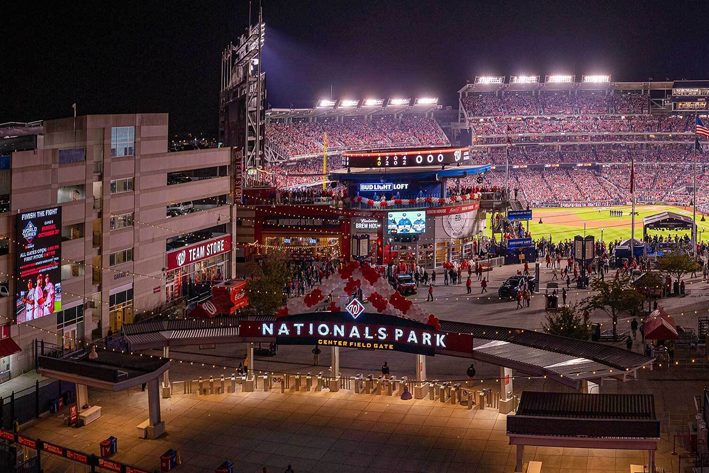
If your orders point to Washington Navy Yard or Marine Barracks Washington at 8th and I, this is the natural fit. Navy Yard is the most bustling neighborhood in the DC area: urban, energetic, and social, built up around Nationals Park with a riverfront boardwalk, a dense restaurant scene, and the Navy Yard-Ballpark station on the Green Line running to Capitol Hill and downtown.
West Half, the 1205 Collection, F1RST Residences, and 1221 Van all sit in the district. One caution worth stating plainly: Navy Yard is a poor choice for a Pentagon assignment. The cross-river trip works by Metro but drags by car, and plenty of people pick the neighborhood on its merits and then spend a full tour regretting the commute. More in our Navy Yard and Ballpark neighborhood guide.
Bethesda, MD
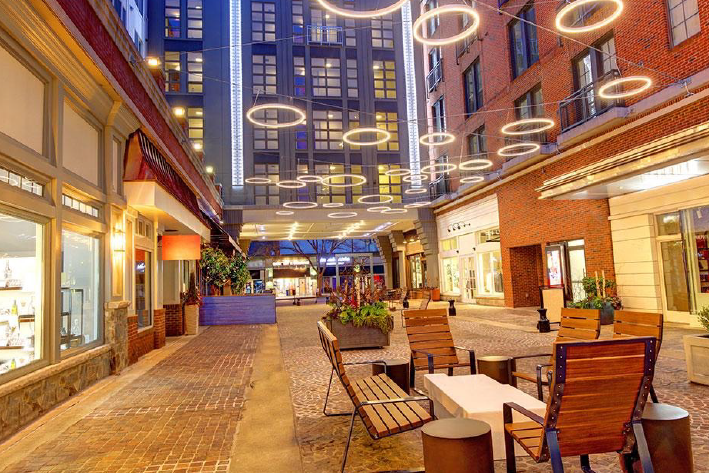
Bethesda draws the medical and research side of the community: Walter Reed National Military Medical Center, Naval Support Activity Bethesda, and NIH. Bethesda station sits on the Red Line into downtown DC through Dupont Circle and Farragut North. It attracts families who want strong schools and a quieter pace without losing rail access, and it is a common landing spot for longer tours and medical residencies where stability matters more than nightlife. 8001 Woodmont is the community here, in downtown Bethesda near Bethesda Row. More in our Bethesda neighborhood guide.
Shaw and the U Street Corridor
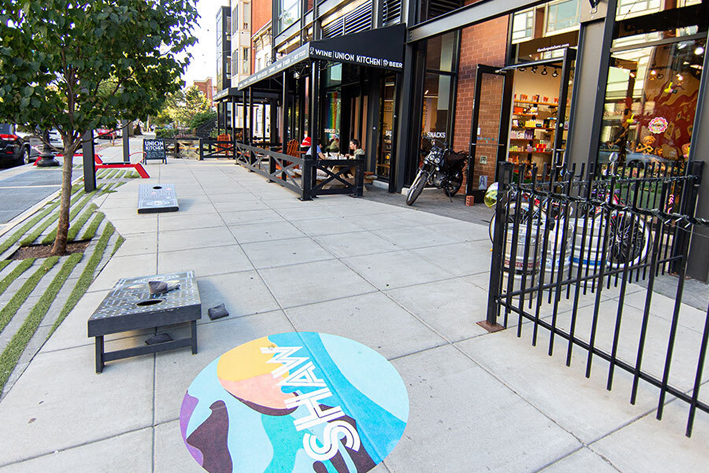
For Fort McNair, Joint Base Anacostia-Bolling, or a District-based command, Shaw and the U Street corridor put you inside the city with more historic character than the newer waterfront neighborhoods. 901W, Atlantic Plumbing, and The Wren are the communities here. 901W offers furnished apartments, which helps if you are arriving ahead of a household goods shipment or serving an unaccompanied tour. More in our Shaw and U Street Corridor neighborhood guide.
How BAH Works in the DC Area
Basic Allowance for Housing in the National Capital Region ranks among the highest in the country, because the market it is calibrated against is expensive. Three things set your rate: your duty ZIP code, your paygrade, and whether you have dependents. It is not a national figure and it is not negotiable, so the first practical step is looking up your actual number through the DoD BAH Rate Lookup rather than working from what someone told you at your last duty station.
Households tend to get surprised by the line items sitting outside the rent figure. Parking is frequently quoted separately in Arlington and DC buildings, utilities vary building to building, and pet rent and amenity fees add up. Ask a leasing office to walk you through full monthly cost rather than advertised rent, then compare that total against your allowance.
Lease Terms That Matter for a PCS
The Servicemembers Civil Relief Act gives you federal lease termination rights civilians do not have. In broad terms, if you receive PCS orders or deployment orders of 90 days or more after signing a lease, you can terminate it with written notice and a copy of your orders. Termination generally takes effect 30 days after the next rent due date.
A few practical notes on top of that:
- Get the military clause in writing and read how the building handles it, since the Act sets a floor and individual leases sometimes offer more.
- Ask how the building treats a lease start date that slips, which happens often when report dates move.
- If you arrive before your household goods, ask about furnished or short-term options rather than paying for storage and a hotel at the same time.
- Confirm what documentation the leasing office needs, since some want the full orders packet and others accept a memo.
Most well-run buildings in this market lease to military households routinely and have the process down. It is still worth confirming rather than assuming.
Your First 30 Days
Transit is the thing to sort out early. WMATA runs Metrorail and Metrobus across all three jurisdictions, and many DoD commands offer transit benefits covering fare. If your command participates, that shifts the parking-versus-rail calculation considerably.
Beyond that, the first month goes easier if you orient locally rather than defaulting to the installation for everything. Commissaries and exchanges operate at Joint Base Myer-Henderson Hall, Fort McNair, and Joint Base Anacostia-Bolling, but gate access and traffic mean most households handle routine errands in their own neighborhood. Finding your closest grocery store, pharmacy, and gym in the first week does more for daily quality of life than almost anything else on a relocation checklist.
Frequently Asked Questions
Which neighborhood is best for a Pentagon assignment?
National Landing in Arlington, Virginia is the closest dense residential area to the Pentagon, with Pentagon and Crystal City stations both on the Blue and Yellow lines. It is the most common choice for Pentagon and Joint Base Myer-Henderson Hall personnel.
Does BAH cover rent in the DC area?
BAH rates for the region are set against local market costs and rank among the highest nationally, but coverage depends on your paygrade, dependency status, and the specific building. Parking and utilities are often quoted separately, so compare your rate against total monthly cost rather than advertised rent.
Can I break a lease if I get new orders?
The Servicemembers Civil Relief Act allows lease termination with PCS orders or deployment orders of 90 days or more, using written notice and a copy of your orders. Confirm the specific process with your leasing office and your legal assistance office.
Should I live in Virginia, DC, or Maryland?
Match the jurisdiction to your reporting location rather than picking first. Virginia works for the Pentagon and Joint Base Myer-Henderson Hall, DC for Washington Navy Yard and District commands, and Maryland for Walter Reed and NIH. State tax treatment differs, so it is worth a conversation with your legal assistance office.
Are furnished apartments available for short notice arrivals?
901W in Shaw offers furnished apartments, which can bridge the gap between arrival and a household goods delivery, or cover an unaccompanied tour.
Orders decide the city. The neighborhood is the part you actually get to choose, and in this region that choice is mostly a commute decision wearing a lifestyle costume. To compare submarkets against your reporting location, explore our Washington, DC neighborhoods guide.
The post Living in the Washington, DC Area as a Military Member appeared first on .
]]>The post A Local’s Guide to Free Things to Do in the Washington, DC Area appeared first on .
]]>Start With the Smithsonian
The Smithsonian is the obvious place to begin, and it stays remarkable no matter how many times you go. Nineteen museums and the National Zoo, all free, all the time, with no timed ticket required for most of them. The National Air and Space Museum, the National Museum of American History, the National Museum of Natural History, and the National Museum of African American History and Culture sit within a few blocks of each other on the National Mall, so you can spend a morning with dinosaurs and an afternoon with the Apollo command module without paying for either. The National Gallery of Art, which is not technically a Smithsonian museum but follows the same rule, holds one of the only Leonardo da Vinci paintings in the Americas and never charges at the door. Pace yourself. Most people try to do three museums in one day and regret it by the third.
The Monuments Are Better After Dark
The monuments and memorials along the Mall are open and free around the clock, and the evening is when they come into their own. The Lincoln Memorial lit up against the reflecting pool, the Jefferson Memorial across the Tidal Basin, the Martin Luther King Jr. Memorial, and the quieter Korean War and Vietnam Veterans memorials all draw far smaller crowds once the tour buses leave. In spring the Tidal Basin cherry blossoms turn the whole walk into something people travel across the country to see, and you can do it on a weeknight after dinner for the price of a Metro fare. Bring water in summer, because the Mall offers very little shade.
Free Concerts on the Anacostia Riverfront
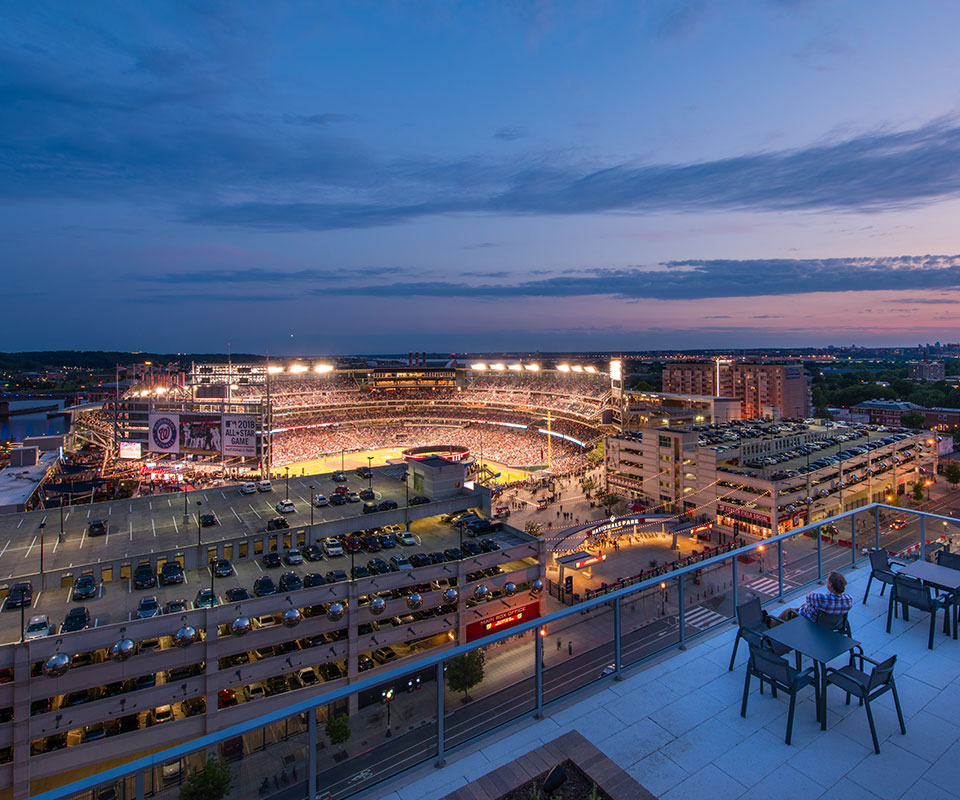
Navy Yard is one of the most social neighborhoods in the DC area, and in the warmer months the riverfront programs offer more free events than almost anywhere else in the region. The Navy Yard Summer Concert Series runs Friday evenings at the Yards Park boardwalk from May into September, with live bands, food vendors, and a river view that residents at West Half, F1RST Residences, and 1221 Van can reach on foot. Diamond Teague Park offers free catch-and-release fishing with gear included, which makes a genuinely good first outing for kids, and Anacostia Riverkeeper runs free guided tours of the river year round. The National Museum of the United States Navy, housed in the old Naval Gun Factory, is also free and rarely crowded. None of it asks for a ticket or a car.
Met Park and Friday Nights in National Landing
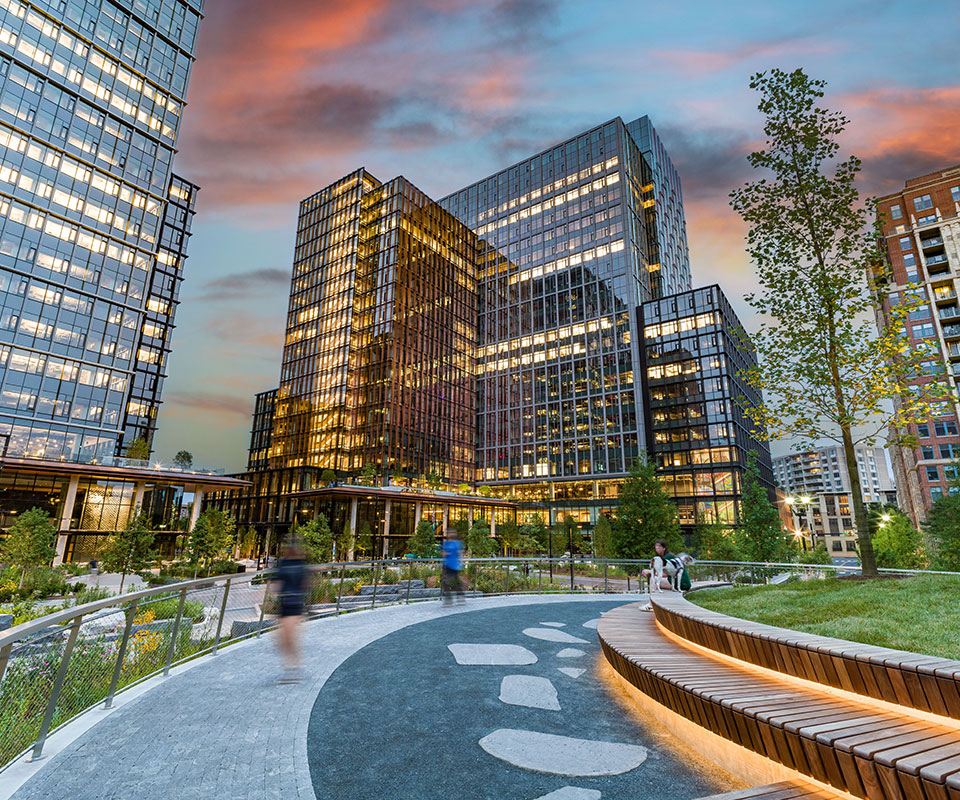
Across the river in National Landing, the stretch of Arlington, Virginia that sits about two Metro stops and five minutes from downtown DC, the neighborhood has built its own calendar of free programming around its parks. Metropolitan Park hosts a summer jazz series co-presented with the DC Jazz Festival on select Thursday evenings, and NaLa Fridays bring local bands and food trucks to the green on Friday nights. Long Bridge Park gives you 36 acres of open space and walking paths along the water, and the Crystal Drive area fills with seasonal happy hours and pop-ups through spring and fall. Residents at RiverHouse and The Bartlett on the Pentagon City end, along with The Grace, Reva, The Zoe, Valen, and 220 Twentieth Street closer to Crystal City, are within walking distance of most of it.
Trails You Can Walk, Run, or Ride
Some of the best free recreation in the region is the trail network, which links whole neighborhoods together without a single admission gate. The Capital Crescent Trail runs from downtown Bethesda to Georgetown along an old rail bed, flat and shaded for most of its length, and it is as good for a morning run as it is for a slow weekend ride; residents at 8001 Woodmont step onto it a few blocks from the door. On the Virginia side, the Mount Vernon Trail follows the Potomac past the monuments and Reagan National, with some of the best skyline views around and no fee to use it. Rock Creek Park cuts a long green corridor through the middle of the city with miles of trails, and on weekends part of Beach Drive closes to cars entirely.
See the Pandas at the National Zoo
The Smithsonian’s National Zoo in Woodley Park earns its own mention, partly because it is free and partly because it is the only place in the country where you can see giant pandas without paying a cent. Bao Li and Qing Bao arrived in 2025 and are most active in the morning, so go early if the pandas are the goal. Admission is free for everyone, though the zoo now requires a free timed-entry pass for every visitor, including infants, which you reserve online before you go. Set aside two or three hours and wear comfortable shoes, because the whole park sits on a hill.
A Few More Worth Keeping in Your Pocket
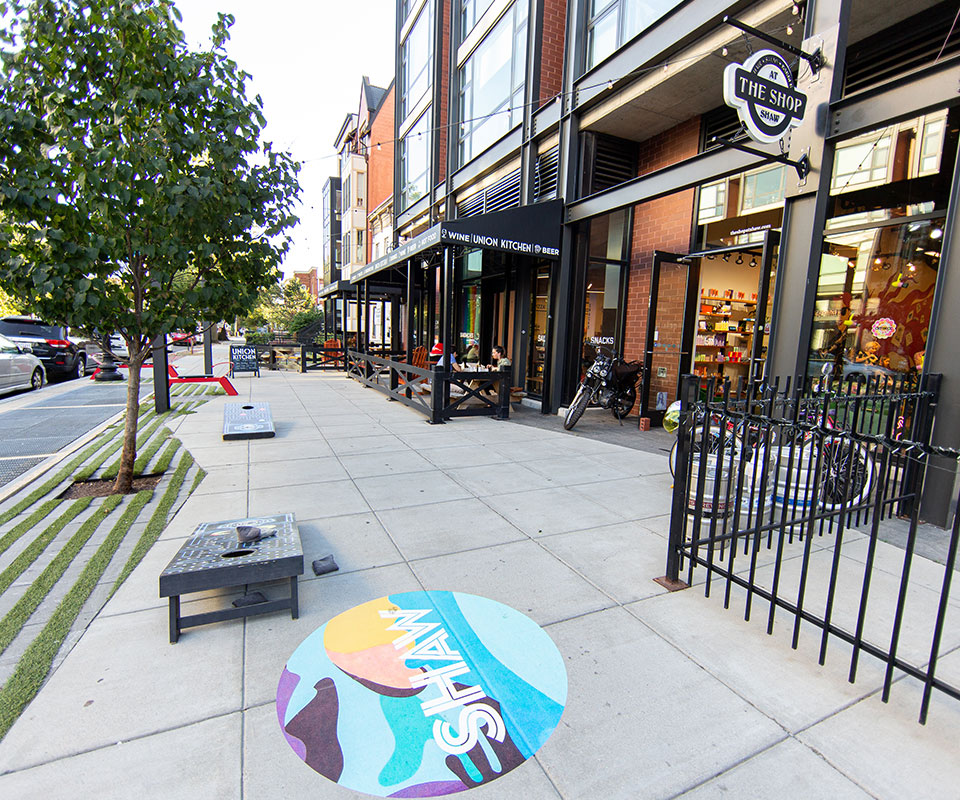
The list runs longer than one post can hold, but a handful more are worth remembering. The Library of Congress, with its Great Hall and the Main Reading Room, is free to tour and has one of the most beautiful interiors in the city. Eastern Market on Capitol Hill costs nothing to wander, and the weekend flea and farmers stalls make it an easy Saturday. The United States Botanic Garden beside the Capitol is free and a warm refuge in the dead of winter. Up in Shaw and along U Street, the African American Civil War Memorial and the murals that line the corridor turn an ordinary walk into a history lesson, one that residents at Atlantic Plumbing, The Wren, and 901W can take in on the way to dinner. Over in Union Market and Eckington, the public plazas and rotating outdoor events near The Batley and Judd & Weiler keep a steady supply of free things to drop in on.
Your Neighborhood Is the Starting Line
The point of living in a well-connected neighborhood is that the city does a lot of the work for you. Pick a Metro line, or just walk out the door, and most weekends you will turn up something free worth showing up for. If you are deciding where in the DC area to land, choose a neighborhood that puts this much within reach. Take a look at where JBG SMITH Living builds across the DC metro area, and start mapping out your first free weekend.
The post A Local’s Guide to Free Things to Do in the Washington, DC Area appeared first on .
]]>The post Where to Shop for Groceries in the DC Metro Area appeared first on .
]]>
Full-Service Grocery Stores by Neighborhood
Most neighborhoods in the region are anchored by at least one major supermarket. Chains like Whole Foods Market, Harris Teeter, Giant, Safeway, and Trader Joe's operate multiple locations across the area, and several sit at the base of apartment buildings.
Navy Yard and the Ballpark District
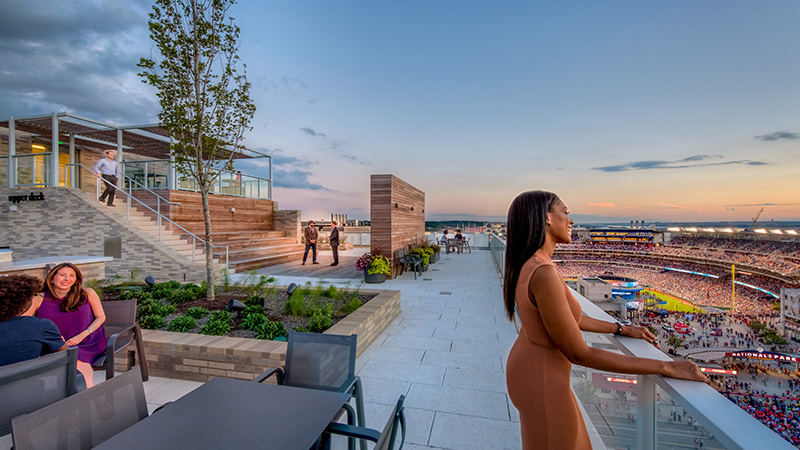
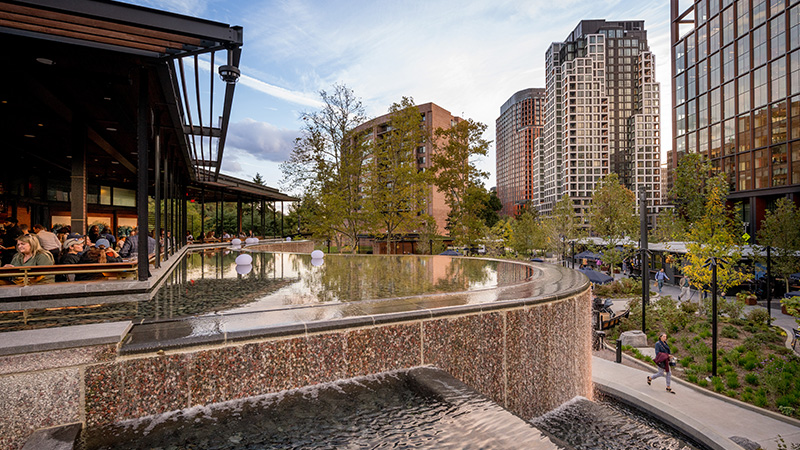
In Navy Yard, a Harris Teeter at The Yards and a Whole Foods Market on H Street SE put a full grocery run within a short walk of the waterfront. JBG SMITH communities here, including West Half, F1RST Residences, and 1221 Van, sit minutes from both. A chain locator such as Harris Teeter's store finder makes it easy to confirm the closest store and current hours.
Shaw and the U Street Corridor
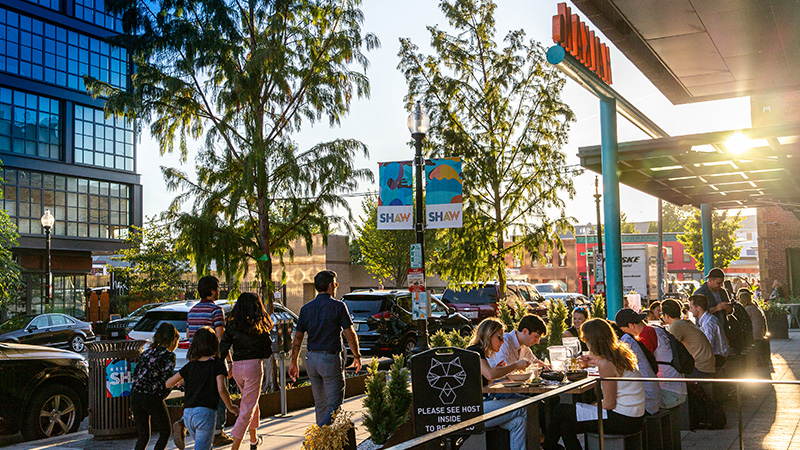
Along the Shaw and 14th Street corridor, a Whole Foods Market anchors the neighborhood near 14th and P, with a Giant on O Street and a Trader Joe's on 14th Street nearby. The Wren sits directly above a Whole Foods and 901W is steps from the same corridor, so for residents there a grocery run is simply part of the walk home.
National Landing (Arlington, VA)
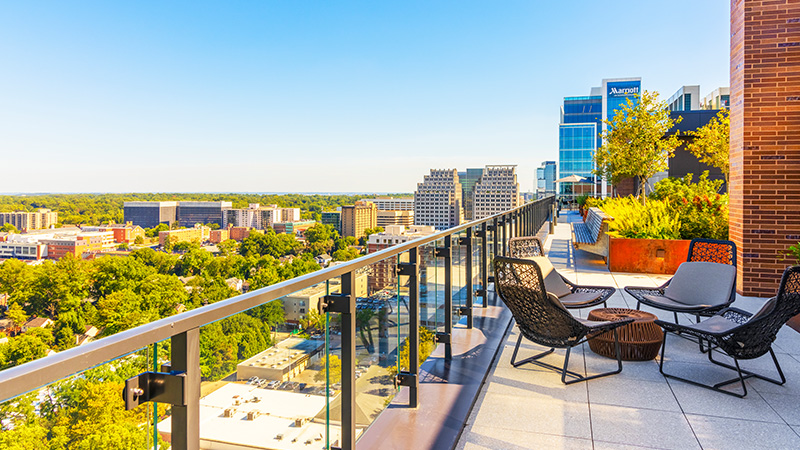
In National Landing, residents of The Bartlett have a full grocery store downstairs. An urban-concept Whole Foods Market anchors the building's ground floor with direct access from the lobby, so the weekly run rarely means leaving the block. A Harris Teeter at Pentagon Row and a Trader Joe's in Pentagon City add more full-service options a short walk away.
Bethesda
Downtown Bethesda is well served by a Giant on Arlington Road, with a Whole Foods Market and MOM's Organic Market a short drive north. Residents of 8001 Woodmont have it easiest of all: a Trader Joe's anchors the building's ground floor, putting the weekly run one elevator ride away.
Farmers Markets Worth a Weekly Trip
For seasonal produce and local goods, the region's farmers markets are hard to beat. The FRESHFARM Dupont Circle Market, founded in 1997 and open Sundays year-round, draws more than fifty farmers and producers in peak season. FRESHFARM runs nearly thirty markets across DC, Maryland, and Virginia, so most residents have one nearby. Eastern Market on Capitol Hill, one of the oldest public markets in the city, pairs fresh produce and meats with artisan vendors. In Bethesda, the Central Farm Market sets up Sundays year-round at Bethesda Elementary with more than one hundred vendors, and the historic Montgomery Farm Women's Cooperative Market on Wisconsin Avenue has operated since the 1930s. Many of these markets match SNAP and EBT dollars, which helps stretch a grocery budget further.
Union Market and Specialty Food Halls
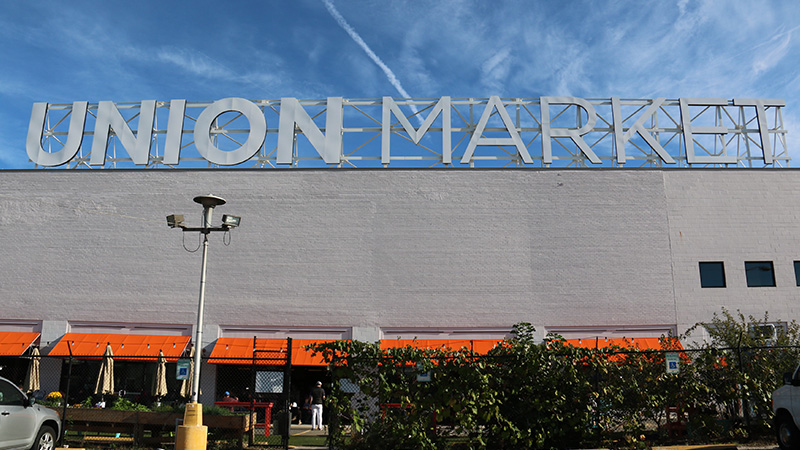
Northeast DC's Union Market district has grown into a destination for food shopping, with grocers, butchers, bakers, and international vendors gathered alongside prepared-food stalls. Nearby, La Cosecha brings together Latin American markets and eateries under one roof. Both are useful for specialty ingredients you will not always find on a standard supermarket shelf. JBG SMITH communities in the surrounding Union Market and Eckington area, including The Batley and Judd & Weiler, sit within easy reach, making the district a natural part of the weekly routine for residents nearby.
Grocery Delivery and Pickup
For weeks when a store run is not realistic, delivery covers the region well. Services like Instacart deliver from most major chains, Amazon Fresh serves Prime members in many neighborhoods, and stores including Harris Teeter and Whole Foods offer their own pickup and same-day delivery. For renters without a car, the mix of nearby stores and reliable delivery means a full pantry rarely takes more than a short walk or a few taps on a phone.
Everyday Essentials Close to Home
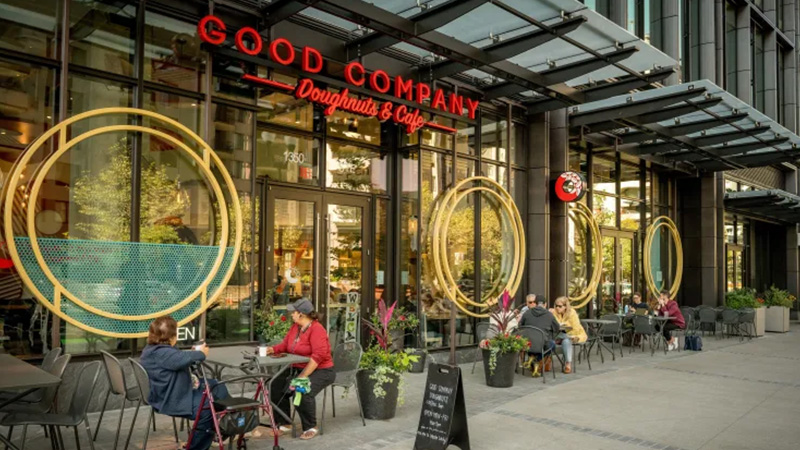
Beyond the weekly haul, the small daily stops matter just as much: a neighborhood cafe, a bakery, a coffee run on the way to the Metro. In walkable submarkets like National Landing, Navy Yard, and Shaw, those everyday essentials sit alongside the grocery anchors, so picking up dinner ingredients or a morning coffee becomes part of daily life rather than a planned errand.
Frequently Asked Questions
Which DC neighborhoods have the best grocery access without a car?
Shaw, Navy Yard, and the U Street corridor all place a full supermarket within a short walk of most apartments, and National Landing in Arlington and downtown Bethesda are similarly well served.
Are there farmers markets open year-round in the DC area?
Yes. FRESHFARM's Dupont Circle Market runs Sundays year-round, and the Bethesda Central Farm Market operates Sundays year-round as well. Several other FRESHFARM locations stay open through the winter.
Can I get groceries delivered in DC, Arlington, and Bethesda?
Yes. Instacart, Amazon Fresh, and the delivery and pickup services from Harris Teeter and Whole Foods cover most of the region.
Do DC farmers markets accept SNAP or EBT?
Many do, and several match SNAP and EBT dollars to stretch a grocery budget further. Check the individual market for current details.
Everyday access to groceries is one of the clearest signals of how livable a neighborhood really is. To see how the area's submarkets compare on the essentials, explore our Washington, DC neighborhoods guide.
The post Where to Shop for Groceries in the DC Metro Area appeared first on .
]]>The post Best Neighborhoods for Car-Free Living in the D.C. Metro appeared first on .
]]>Whether you are relocating to D.C. for the first time or rethinking your current setup, here is a look at the neighborhoods where car-free living makes the most sense.
Navy Yard and the Southwest Waterfront
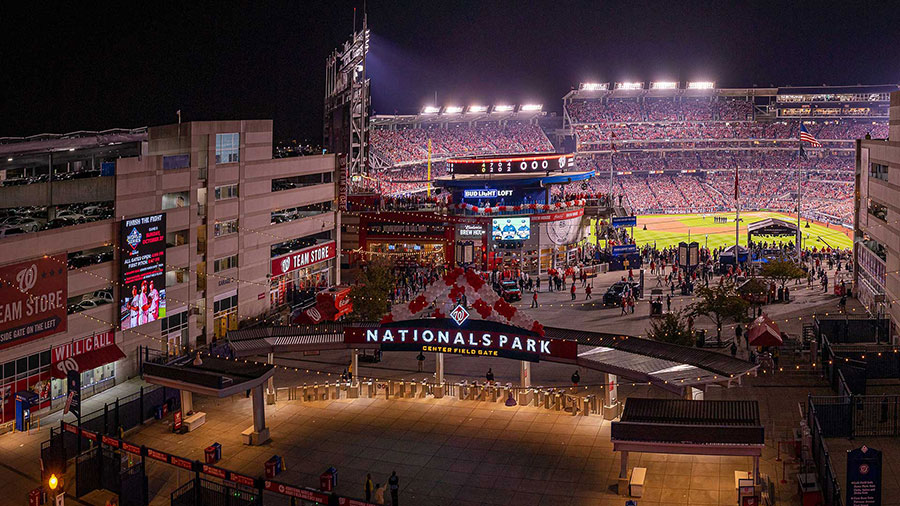
Few neighborhoods in Washington have transformed more completely in the last decade than Navy Yard. Today, it is one of the most transit-accessible and walkable areas in the city, anchored by the Green Line's Navy Yard-Ballpark station and surrounded by riverfront paths, retail, and everyday services within walking distance.
Residents here can reach Capitol Hill in minutes, connect to the wider Metro system with a single transfer, and access the Anacostia Riverwalk Trail on foot. The neighborhood's density makes car ownership genuinely unnecessary for most daily routines.
Walk Score: 90/100 (SW Ballpark-Navy Yard neighborhood — 11th most walkable in DC)
JBG SMITH Living properties in the area include West Half, 1221 Van and F1rst Residences, all positioned within close range of Metro access and the waterfront.
Shaw and U Street
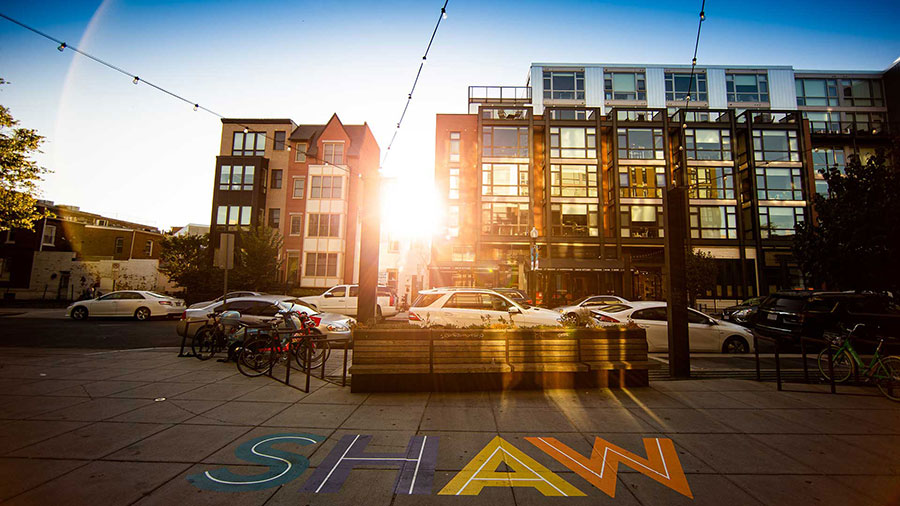
Shaw is one of the most connected neighborhoods in Washington for transit, biking, and walking. The Shaw-Howard University and U Street/Cardozo Metro stations serve the Green and Yellow lines, and the neighborhood sits at the intersection of several major bus corridors.
The corridor between U Street and Florida Avenue is dense with restaurants, grocery options, and neighborhood services, meaning most daily errands are possible on foot or by bike. Shaw also connects directly to the Capital Bikeshare network, which runs throughout the city and into Arlington.
Walk Score: 97/100 (Logan Circle-Shaw neighborhood — 4th most walkable in DC, Walker's Paradise)
JBG SMITH Living residences in the Shaw area include Atlantic Plumbing, The Wren, and 901W.
Bethesda
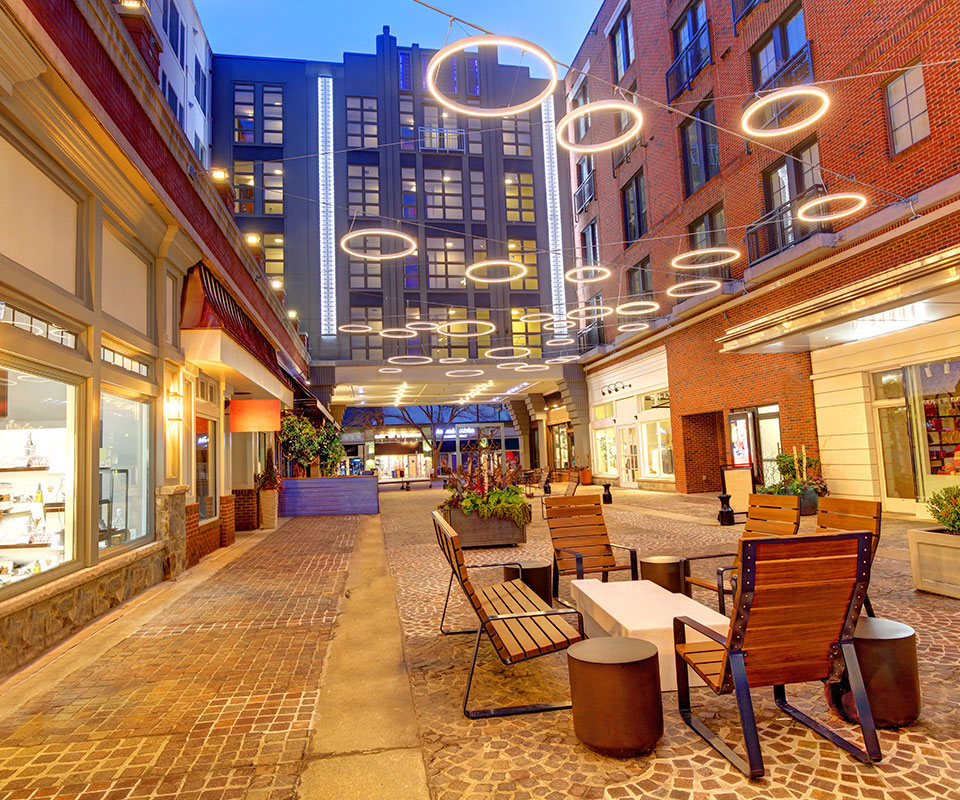
Downtown Bethesda is one of the few suburban nodes in the metro area that genuinely functions without a car. The Bethesda Metro station sits on the Red Line, offering direct service to downtown D.C., and the area's street grid is compact and pedestrian-friendly by suburban standards.
Residents have walkable access to a full range of grocery stores, restaurants, and retail. The Capital Crescent Trail connects Bethesda to Georgetown. The Purple Line, currently under construction, will add crosstown rail access when it opens and will also restore the trail segment east of Bethesda to Silver Spring.
Walk Score: 99/100 (downtown core — Walker's Paradise. Note: city-wide average is 45; scores apply to the downtown area near Metro)
8001 Woodmont puts residents at the center of Bethesda's walkable downtown core. Browse Bethesda apartments.
National Landing, Arlington
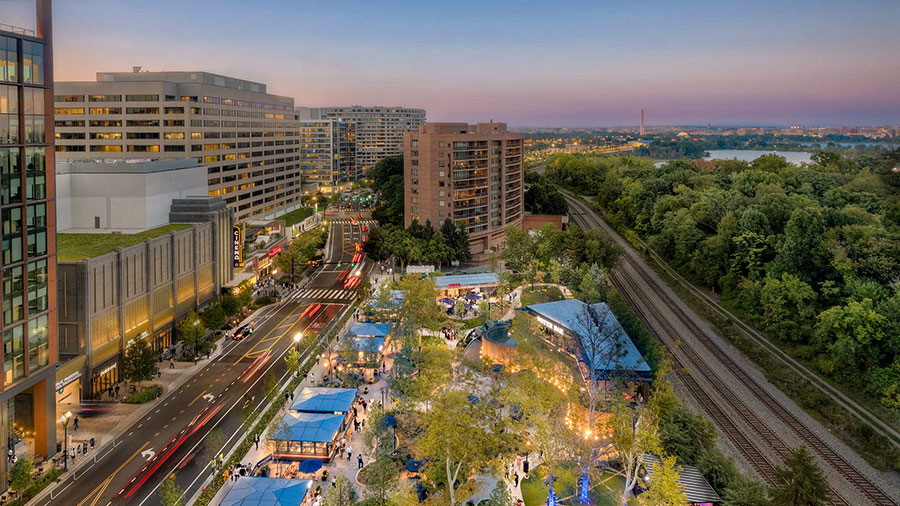
National Landing, located in Arlington, VA, is one of the most transit-rich locations in the entire metro region. The Blue and Yellow lines both serve the area, and continued investment in the neighborhood has brought new retail, streetscape improvements, and infrastructure that make the area increasingly walkable.
Reagan National Airport is one Metro stop away, and dedicated bike lanes connect National Landing to the Potomac riverfront trail network. For commuters heading into Washington or toward Tysons Corner, National Landing offers direct access to both.
Walk Score: 93/100 (Walker's Paradise with excellent transit)
JBG SMITH Living offers a range of National Landing apartments, including RiverHouse, 220 20th Street, The Grace, Reva, The Zoe, Valen, and The Bartlett, which anchors the north end of the neighborhood.
How to Think About Car-Free Readiness
When evaluating a neighborhood for car-free living, three factors matter most: transit frequency and coverage, walkable access to daily services such as grocery stores, pharmacies, and laundry, and bike infrastructure for trips that fall between walking distance and transit range.
Walk Score, Transit Score, and Bike Score are useful starting benchmarks when comparing neighborhoods. For residents who want occasional access to a vehicle without owning one, car-share services operate throughout D.C. and Arlington.
Finding the Right Fit
Car-free living in the D.C. metro is not one-size-fits-all. Navy Yard suits residents who want waterfront access, Green Line connectivity, and an energetic, social scene. Shaw works well for those who prioritize walkability and neighborhood density. Bethesda is the strongest option for commuters within Maryland or anyone who wants a quieter streetscape with full urban services. National Landing is the best choice for commuters who need quick airport access, a fast Metro ride into downtown D.C., and connectivity across Northern Virginia.
All four neighborhoods share one thing in common: car ownership here is optional, not required.
Explore JBG SMITH Living apartments across these neighborhoods at jbgsmithliving.com.
Frequently Asked Questions
Is Washington, D.C. good for car-free living?
Yes. Washington, D.C. consistently ranks among the most car-optional cities in the United States. The WMATA Metro system covers the District and extends into Arlington, Bethesda, and Northern Virginia, and neighborhoods like Shaw, Navy Yard, and National Landing have Walk Scores of 90 or above.
What are the most walkable neighborhoods in the D.C. metro area?
Shaw and U Street, Navy Yard, downtown Bethesda, and National Landing in Arlington are among the highest-scoring neighborhoods for walkability and transit access in the D.C. metro area. Each has a Walk Score above 90 in its core and is served by at least one Metro line.
Do you need a car to live in Washington, D.C.?
Many D.C. residents live comfortably without a car. In transit-connected neighborhoods, daily errands, commuting, and weekend activities are all manageable by Metro, bus, bike, or on foot. The right neighborhood choice is the most important factor in making car-free living practical.
The post Best Neighborhoods for Car-Free Living in the D.C. Metro appeared first on .
]]>The post Best DC Metro Neighborhoods: Where to Live Guide appeared first on .
]]>Written by JBG SMITH Living, a DC Metro multifamily developer with more than 50 years helping residents find their place across Washington, DC, Maryland, and Virginia.
The Washington, DC Metro area is bigger than the city it is named for. Inside the Beltway, roughly 35 miles across, the region pulls together Washington, DC, the close-in Maryland suburbs, and the riverfront neighborhoods of Northern Virginia. So when people ask where they should live here, the honest answer depends less on which jurisdiction and more on how you want your week to feel. This guide walks through the neighborhoods renters ask about most, with a sense of what daily life actually looks like in each.
A neighborhood sets the shape of your days: your commute, your Saturday morning coffee, how close you are to the people you actually see. Most of the places below sit within a single ride on Metrorail, run by WMATA, which is why residents here tend to care as much about the nearest station as the square footage of a floor plan. If walkability matters most to you, Walk Score is a quick way to compare one address against another. As you read, picture your own routine.
National Landing in Arlington, Virginia
National Landing sits in Arlington, Virginia, just across the Potomac River from the District. It is home to Amazon’s second headquarters and Virginia Tech’s Innovation Campus, a short hop from the Pentagon, and it has changed faster than almost any neighborhood in the country these past few years. Crystal City and Pentagon City make up most of it, both walkable and well served by the Blue and Yellow lines, with Reagan National Airport only minutes away. Errands are easy too, thanks to a Whole Foods Market at the base of The Bartlett. Arlington County regularly lands near the top of regional rankings for connectivity and amenities. Renters who want room to spread out gravitate to RiverHouse, three buildings across 36 landscaped acres with two pools and six tennis courts. The Mount Vernon Trail runs right through the neighborhood and up into DC, so every community here has easy access for biking and running. You can see the full lineup of communities on our National Landing neighborhood page.
Navy Yard and the Capitol Riverfront
Down along the Anacostia in southeast DC, Navy Yard and the Capitol Riverfront have become the city’s go-to waterfront neighborhood. On game nights the whole area orbits Nationals Park. The rest of the time it runs on Yards Park, the Anacostia Riverwalk Trail, and an easy ride over to The Wharf. The Navy Yard-Ballpark station on the Green Line keeps downtown close. West Half looks straight into Nationals Park, and directly across the street 1221 Van shares the same view and adds a rooftop infinity pool. Browse the communities on our Navy Yard neighborhood page.
Shaw and the U Street Corridor
Few parts of Washington hold as much history as Shaw and the U Street corridor. This was the center of the city’s jazz era, and the Lincoln Theatre and Howard Theatre still draw crowds today, with Howard University at the center of the neighborhood’s creative and intellectual life. It is genuinely walkable, with a Whole Foods Market on Florida Ave. The housing leans loft-style. The Wren sits above that Whole Foods with two-story homes, and Atlantic Plumbing carries an industrial edge a few blocks over. Our Shaw and U Street neighborhood page has more about the corridor and the communities there.
Union Market and Eckington
Just north of the Capitol, Union Market and Eckington have grown into one of the more creative, food-minded corners of Northeast DC. The Union Market food hall is still the anchor, surrounded by the fast-growing NoMa district, Gallaudet University, and the Metropolitan Branch Trail for runners and cyclists. The NoMa-Gallaudet U station on the Red Line connects it to the rest of the city and runs all the way up into Maryland. The Batley is a popular choice here, with a vintage-modern look and a heated saltwater rooftop pool that stays open year-round. See the rest of our Union Market neighborhood page.
Downtown Bethesda in Maryland
Cross the Maryland line and downtown Bethesda is the more polished, low-key alternative, and you give up none of the commute. Bethesda Row covers most of the shopping and dining, plus a weekend farmers market, while the National Institutes of Health and the Capital Crescent Trail shape the area’s professional and outdoor character. The Bethesda station is on the Red Line, and the coming Purple Line will add new east-west connections across the suburbs. Montgomery County is known for its schools and quality of life. For bigger floor plans in the middle of it all, there is 8001 Woodmont. Find the details on our Bethesda neighborhood page.
Finding the Right Fit Across the Region
Where you land in the DC Metro comes down to the pace you want. Navy Yard hums with the river and the ballpark. Shaw runs on music and history. Bethesda keeps things calm. Data from the U.S. Census Bureau shows the region still growing and getting more diverse, which is part of why there is a neighborhood here for almost everyone. When you are ready, browse current availability through our apartment search, or start at our neighborhoods overview to compare them side by side.
Frequently Asked Questions
What are the best neighborhoods in the DC Metro area for renters?
It depends on the lifestyle you want. National Landing in Arlington, Virginia suits renters near tech and federal employers who value space and amenities. Navy Yard and the Capitol Riverfront draw people who want waterfront energy and walkability in DC. Shaw and U Street appeal to renters who love music and nightlife, Union Market and Eckington fit a creative, food-focused crowd, and downtown Bethesda in Maryland is a polished, well-connected pick just outside the District.
Is it better to live in DC, Maryland, or Virginia?
Each part of the region has its own draw, and Metrorail ties them together. Northern Virginia neighborhoods like National Landing put you near major employers and Reagan National Airport. Maryland communities such as Bethesda are known for schools and green space. DC itself keeps you closest to the city’s culture, dining, and waterfront. Most people choose on commute and neighborhood character rather than the state line.
Which DC Metro neighborhoods are the most walkable?
Navy Yard, Shaw and U Street, and downtown Bethesda all rank high for walkability, with errands, dining, and Metro within easy reach. National Landing in Arlington keeps getting more walkable as its retail and trail network fills in. Checking walkability by address is a good gut-check on how car-free your routine could be.
How do I get around the DC Metro area without a car?
Metrorail links most of the region’s neighborhoods, and many residents pair it with trail networks like the Mount Vernon Trail in National Landing, the Anacostia Riverwalk, the Metropolitan Branch Trail, and the Capital Crescent Trail. Pick a home near a station and a walkable retail strip and car-free living is realistic across much of the DC Metro.
The post Best DC Metro Neighborhoods: Where to Live Guide appeared first on .
]]>The post Moving to the Washington, DC Area: A Complete Relocation Checklist appeared first on .
]]>Moving to the Washington, DC area is one of the more exciting decisions you can make. It’s also one of the more complex ones. The region spans three jurisdictions, the District of Columbia, Northern Virginia, and suburban Maryland, each with its own tax structure, transit networks, and neighborhood character. There are dozens of distinct neighborhoods to choose from, a transit system that fundamentally shapes daily life, and a cost of living that rewards those who do their homework.
That complexity is what makes a good checklist valuable. At JBG SMITH Living, we’ve spent more than 50 years helping people find their home in the DC metro area. We operate 16 apartment communities across DC, Virginia, and Maryland, from Navy Yard and Shaw in the District to National Landing in Arlington and Bethesda in Montgomery County. This guide draws on that experience to walk you through what you actually need to know, do, and decide before and after your move.
Whether you’re relocating for a new job, following a partner, starting school, or simply ready for a change of scenery, this is your roadmap. For a broader look at what life in the region looks like, you can also explore our guide to living in the DC Metro area.
Why the DC Metro Area?
Before diving into logistics, it’s worth stepping back to appreciate what you’re moving into. The DC Metro area is the sixth-largest metropolitan region in the United States, with roughly six million residents, and its economy consistently ranks among the strongest in the country. The median household income exceeds $106,000, driven by a job market that extends well beyond government.
Federal agencies and contractors remain major employers, but the region’s economy has diversified significantly. Northern Virginia has become a genuine tech hub, anchored by Amazon’s HQ2 in National Landing and growing presences from Microsoft, Google, and hundreds of startups. Healthcare is expanding rapidly across the region, and the concentration of universities, think tanks, international organizations, and nonprofits creates career pathways that few other cities can match.
Then there’s the quality of life. The Smithsonian’s 21 museums and galleries are free. The Kennedy Center, 9:30 Club, and The Anthem host world-class performances. The dining scene spans Michelin-starred restaurants and $3 pupusas at Eastern Market. Rock Creek Park, the Chesapeake and Ohio Canal towpath, and the Mount Vernon Trail offer genuine outdoor escapes without leaving the metro area. And the region experiences all four seasons, cherry blossoms in spring, warm summers along the waterfront, crisp fall foliage, and winters that are cold but rarely severe enough to shut the city down for long.
Choosing Your Neighborhood: DC, Virginia, or Maryland
The first major decision for any DC-area relocator is understanding the three-jurisdiction landscape. Each has distinct advantages, and the right choice depends on where you work, how you want to commute, and what kind of neighborhood experience you’re looking for.
Washington, DC
Living in the District itself puts you closest to the densest concentration of culture, dining, nightlife, and walkable neighborhoods. DC residents pay no state income tax, though rent tends to be higher than the surrounding suburbs. The trade-off is access: you’re steps from Metro, museums, and the energy of a truly urban environment.
Navy Yard and the Ballpark District have transformed into one of DC’s most sought-after neighborhoods, with waterfront parks, Nationals Park, and a growing roster of restaurants. JBG SMITH operates West Half, F1RST Residences, and 1221 Van in this area, all within walking distance of the Navy Yard Metro station. Learn more about apartments in Navy Yard/Ballpark.
Shaw and the U Street Corridor are home to some of DC’s best dining, live music, and nightlife, anchored by 14th Street’s restaurant row and the historic Howard Theatre. The neighborhood blends renovated row houses with modern apartment buildings like Atlantic Plumbing, The Wren, and 13|U. Explore Shaw/U Street Corridor apartments.
NoMa and Union Market have emerged as a dining and arts destination centered around the Union Market food hall. The area offers quick Metro access on the Red Line and is home to The Batley and Judd & Weiler apartments. For a deeper dive, read our NoMa neighborhood guide, or browse Union Market/Eckington apartments.
Northern Virginia
National Landing in Arlington is the region’s biggest growth story. Amazon’s HQ2 and Virginia Tech’s Innovation Campus are reshaping the Crystal City and Pentagon City corridors, bringing new retail, parks, and thousands of jobs. JBG SMITH is the area’s largest residential operator, with communities including RiverHouse, Bartlett, The Zoe, Valen, The Grace, Reva, Central Place, and 220 Twentieth. Metro access is excellent. Crystal City, Pentagon City, and Rosslyn stations are all within the portfolio.
Virginia’s state income tax is moderate, and the newer building stock in National Landing means modern finishes, smart-home technology, and extensive amenity packages. For tech professionals, defense contractors, or anyone commuting to the Pentagon or Reagan National Airport, it’s hard to beat the convenience. See available National Landing/Arlington apartments.
Maryland
Bethesda offers a different experience: a walkable downtown with excellent restaurants, strong public schools, and a suburban feel that’s still directly connected to DC via the Red Line Metro. JBG SMITH’s 8001 Woodmont is located in the heart of Bethesda’s Woodmont Triangle. For families or anyone who wants more space without sacrificing Metro access, Bethesda is a strong option. Explore Bethesda apartments.
Not sure where to start? Explore all of JBG SMITH Living’s neighborhoods to compare what each area offers.
Budgeting for Your Move
The DC Metro area is not an inexpensive place to live, but it’s a market that rewards informed budgeting. Understanding the major cost categories before you arrive prevents surprises and helps you make trade-offs with confidence.
Rent
Rent varies significantly by neighborhood, building age, and unit type. As a general range: expect $1,800 to $3,200 per month for a one-bedroom apartment in DC proper, $1,700 to $2,800 in National Landing, and $1,900 to $2,900 in Bethesda. Studios are available at lower price points, and two- and three-bedrooms are proportionally more in neighborhoods with newer building stock. The specific building’s amenity package also affects pricing. A building with a fitness center, rooftop pool, and co-working space is bundling value that would cost hundreds per month separately.
Move-In Costs
Budget for first month’s rent plus a security deposit (typically one month’s rent in DC, though this varies by jurisdiction and building). Adding renter’s insurance, utility deposits, and any moving company fees, you should plan for $4,000 to $8,000 in upfront move-in costs depending on your rent level.
Monthly Expenses Beyond Rent
Utilities run approximately $150 to $250 per month for a standard apartment (electric, gas, water, trash), though some buildings include certain utilities in rent. Always ask. Internet service typically costs $60 to $100 per month. Renter’s insurance is affordable, usually $15 to $30 per month, and most buildings require it.
One of the biggest budget variables is transportation. If you choose a Metro-accessible apartment and can commute without a car, you’ll save substantially. The average cost of car ownership in the DC area, including payments, insurance, gas, and parking, can exceed $800 per month. A monthly Metro pass is a fraction of that.
For renters seeking below-market-rate options, the DC metro area offers several programs that reserve apartments at reduced rents. DC’s Inclusionary Zoning program, Virginia’s Committed Affordable Units, and Maryland’s MPDU program are all active. Learn more about affordable housing programs through JBG SMITH Living.
Getting Around: Transit, Bikes, and Whether You Need a Car
The Washington Metro system is the backbone of transportation in the DC area. Six color-coded rail lines connect 98 stations across DC, Virginia, and Maryland, and the system carries hundreds of thousands of riders daily. If you’re new to the area, the most important thing to understand is that Metro proximity shapes nearly everything: rent prices, commute times, and daily convenience. You’ll want to get a SmarTrip card before you arrive and download the WMATA app for real-time schedules.
Can you live without a car? In many DC-area neighborhoods, yes, comfortably. With JBG SMITH Living, 98 percent of our communities are Metro-served, and many are in neighborhoods where groceries, dining, and daily errands are all within walking distance. Navy Yard, Shaw, NoMa, and National Landing all score exceptionally well for walkability and transit access.
Beyond Metro, the region offers Capital Bikeshare (one of the largest bike-share systems in the country), an expanding network of protected bike lanes, and the Metropolitan Branch Trail connecting Union Station to Silver Spring. For suburban commuters, MARC and VRE commuter rail lines serve the Baltimore-DC and Fredericksburg-DC corridors.
If you are bringing a car, factor in parking costs ($100 to $300 per month for garage parking, depending on the building), residential parking permits (required in most DC neighborhoods), and an E-ZPass for Virginia’s express lanes and regional tolls.
Finding Your Apartment
Apartment hunting in the DC Metro area is competitive, especially during the spring and summer months when inventory turns over fastest. A few principles will make the process smoother.
Start your search six to eight weeks before your target move date. This gives you time to research neighborhoods, schedule tours (virtual or in-person), and complete applications without rushing. If you’re relocating from out of state, most reputable buildings offer virtual tours and video walk-throughs that are detailed enough to make confident decisions remotely.
Know your priorities before you start browsing. Metro access, walkability, in-unit laundry, pet-friendliness, and building amenities (fitness center, rooftop, co-working space) are the factors that most affect daily satisfaction. For a detailed breakdown of what to evaluate, see our guide to what to look for in a DC metro apartment.
When comparing buildings, look beyond the listed rent to understand total value. A building that includes a fitness center, pool, package lockers, and co-working space is effectively bundling services that cost hundreds per month elsewhere. Smart package systems and on-site maintenance teams may seem like small details, but they matter on a daily basis.
For pet owners, “pet-friendly” means different things at different buildings. Ask about breed and weight restrictions, monthly pet rent, and whether the building has a dedicated dog park or pet wash station. JBG SMITH communities are designed with pets in mind, some with on-site dog runs and easy access to neighborhood parks.
Ready to start browsing? Search all JBG SMITH Living apartments by neighborhood, unit type, and price.
Your DC Relocation Checklist: Week by Week
This is the practical timeline. Bookmark this section and check items off as you go.
8 Weeks Before Your Move
- Research neighborhoods, explore JBG SMITH’s neighborhood pages to compare options
- Establish your budget for rent, move-in costs, and monthly expenses
- Begin apartment hunting online, search available apartments
- If moving long-distance, start getting quotes from moving companies
- Declutter and decide what to move, donate, or sell
6 Weeks Before
- Schedule apartment tours (virtual or in-person)
- Research renter’s insurance options and get quotes
- If bringing a car, get an E-ZPass and research parking in your desired neighborhood
- Begin packing non-essential and seasonal items
- If you have pets, confirm breed and weight policies at target buildings
4 Weeks Before
- Sign your lease and pay security deposit
- Activate renter’s insurance to start on move-in day
- Submit change-of-address form with USPS
- Arrange utility transfers or new accounts (electric, gas, internet)
- Confirm moving company dates, times, and building access instructions
2 Weeks Before
- Pack room by room, labeling boxes clearly
- Get a SmarTrip card and download the WMATA app
- Sign up for Capital Bikeshare if you plan to bike
- Prepare a moving-day essentials bag (documents, chargers, toiletries, change of clothes)
- Forward prescriptions to a pharmacy near your new address
Move Week
- Complete packing and do a final walkthrough of your current home
- Pick up keys and do a walk-through of your new apartment, note any existing damage
- Confirm internet installation and test utilities
- Locate your nearest grocery store, pharmacy, and Metro station
- Introduce yourself to the building’s leasing or concierge team
First 30 Days in the DC Area
- Get your DC, Virginia, or Maryland driver’s license or ID, visit the DC DMV or your state’s equivalent
- Register your vehicle if applicable
- Register to vote, DC Board of Elections or your jurisdiction’s registrar
- Explore DC.gov’s new resident resources for additional local information
- Walk your neighborhood thoroughly, find your go-to coffee shop, the best grocery route, and the park you’ll visit most
- Try at least one thing that’s uniquely DC: a free Smithsonian museum, a walk around the Tidal Basin, or a half-smoke from a local spot
Frequently Asked Questions
Is Washington, DC a good place to live?
For most people, yes. The DC Metro area offers a strong job market across multiple industries, world-class cultural institutions (many of them free), excellent transit, and neighborhoods with genuinely distinct characters. The cost of living is above the national average, but salaries in the region tend to reflect that. It’s a city that rewards curiosity and engagement.
How much does it cost to live in the DC area?
Rent for a one-bedroom apartment typically ranges from $1,800 to $3,200 depending on the neighborhood and building. Utilities run $150 to $250 per month, and groceries are moderately above the national average. The biggest variable is transportation: living near Metro and going car-free can save $800 or more per month. For below-market options, explore JBG SMITH’s affordable housing programs.
What are the best neighborhoods for newcomers to the DC area?
It depends on your priorities. Navy Yard offers waterfront living and easy access to Nationals Park. Shaw and U Street have some of the best dining and nightlife in DC. NoMa is a growing arts and food hub near Union Market. National Landing in Virginia is ideal for tech professionals near Amazon HQ2. Bethesda in Maryland provides a walkable suburban-urban mix with Red Line Metro access. Explore all JBG SMITH neighborhoods to compare.
Do I need a car in Washington, DC?
In most neighborhoods where JBG SMITH operates, no. The Metro system, Capital Bikeshare, and high walkability scores make car-free living practical and cost-effective. If you work in a suburban area not well-served by Metro, or have frequent commitments outside the region, a car may be helpful, but many DC-area residents find they use theirs less and less after moving to a transit-accessible neighborhood.
What’s the job market like in DC?
Diverse and generally strong. The federal government and defense contractors remain major employers, but the tech sector has grown significantly with Amazon HQ2, Microsoft, and a thriving startup ecosystem in Northern Virginia. Healthcare, higher education, consulting, international organizations, and nonprofits round out a job market that’s more varied than many newcomers expect. Networking is important here, the city runs on professional connections.
What should I know about DC weather?
The DC area has four distinct seasons. Summers are hot and humid, with temperatures regularly reaching the upper 80s and 90s. Winters are cold but manageable, with occasional snow. Spring is the highlight, cherry blossom season around the Tidal Basin is a genuine regional event. Fall is crisp and pleasant. If you’re coming from a mild climate, invest in layers and a good winter coat.
How far in advance should I start apartment hunting?
Plan to begin your search six to eight weeks before your target move date, especially if you’re moving during the busy season (April through September). Inventory moves quickly, and desirable units in popular neighborhoods often lease within days. Starting early also gives you time to compare buildings and tour your top options. Browse available apartments at JBG SMITH Living to see current listings.
Are there affordable apartment options in the DC area?
Yes. Washington, DC’s Inclusionary Zoning program, Virginia’s Committed Affordable Units, and Maryland’s Moderately Priced Dwelling Unit program all reserve apartments at below-market rents for qualifying households. JBG SMITH Living participates in several of these programs and also operates LEO Impact Capital, a platform that has preserved more than 3,000 affordable units across the region. Visit our affordable housing page for details.
Welcome to the DC Area
Moving to a new city is a big decision, and the DC metro area rewards those who take the time to learn its rhythms, the neighborhoods that match their lifestyle, the transit connections that simplify their commute, and the communities that make the region feel like home. We’ve been part of this landscape for more than 50 years, and we’ve watched thousands of newcomers settle in and thrive.
When you’re ready to start your apartment search, browse all JBG SMITH Living communities by neighborhood, unit type, and price. You can also schedule a tour at any of our 16 communities across DC, Virginia, and Maryland.
And if you’re still narrowing down your neighborhood, explore our neighborhood guides to see what each area has to offer. We’re here when you’re ready.
The post Moving to the Washington, DC Area: A Complete Relocation Checklist appeared first on .
]]>